30Apr
Contact us now. We advise you without obligation!
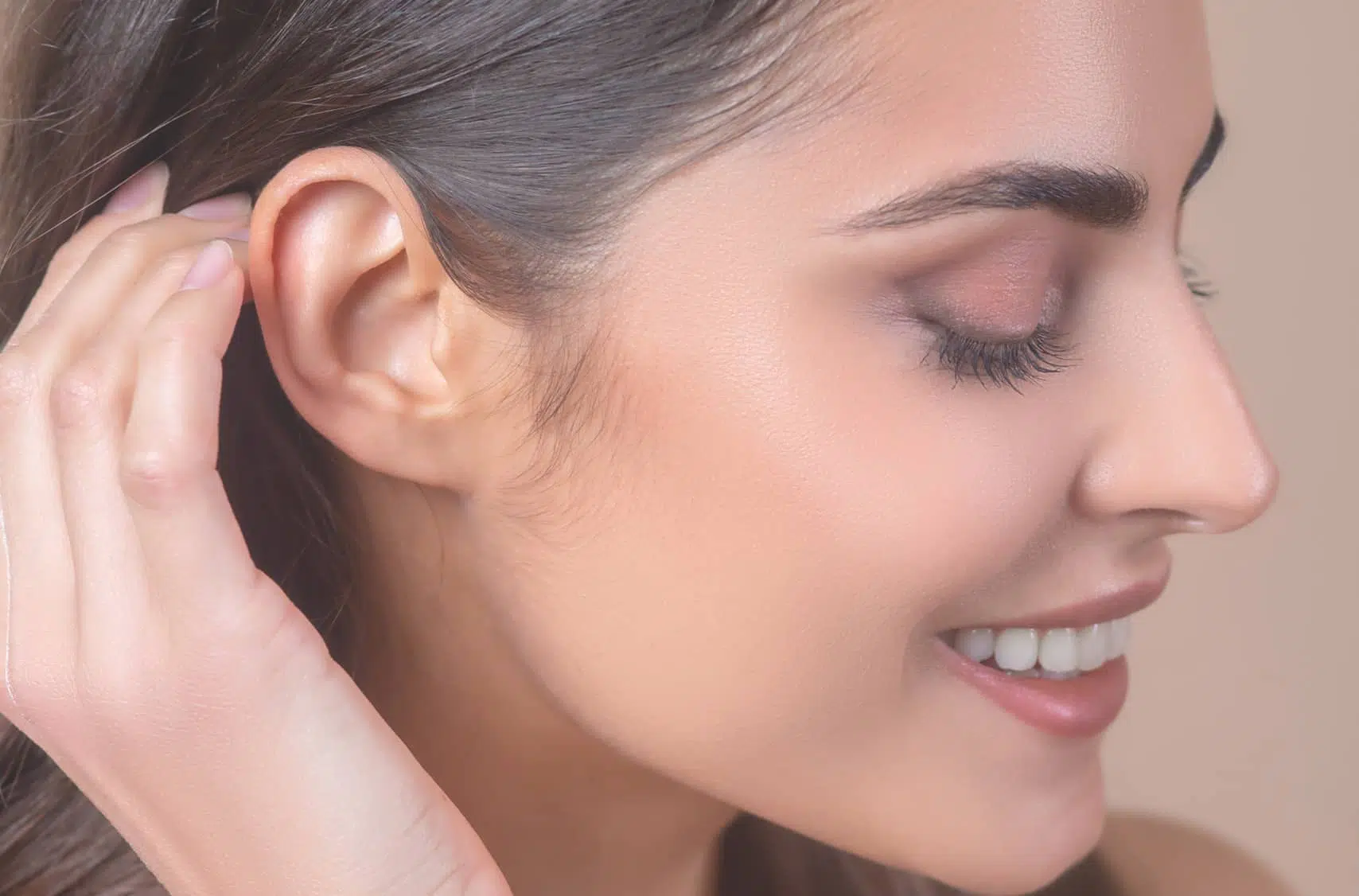
Reposition prominent ears, refine the antihelical fold and restore facial balance with a precise otoplasty — performed under local anesthesia with hidden retroauricular incision.
The package includes:
Surgery-only prices — package available on request.
All prices in US Dollars · personalised quotes are issued after your free consultation.
Otoplasty — or ear correction — is a surgical procedure that reshapes the ear cartilage to correct prominent or malformed ears. The classic indication is the prominent ear ('sticking-out ear'), in which the angle between the ear and the side of the head exceeds 30 degrees.
The procedure is performed under local anesthesia (general for young children) through a small incision hidden behind the ear. There is no visible external scar. Surgery lasts 1.5 to 2 hours.
Children from age 6–7 onward (the ear has reached 90% of its adult size) and adults of any age, in good general health, with prominent or malformed ears causing functional or psychological discomfort. The procedure is one of the few cosmetic surgeries routinely performed in childhood when indicated.
The ears sit naturally against the head. The antihelical fold is restored. The auriculocephalic angle is normalised. Result is essentially final at 6 months once residual swelling resolves. The change is permanent.
A prominent ear has two anatomical defects, which often coexist:
The natural Y-shaped fold inside the ear is poorly developed or missing. The ear lacks its normal upper-third recess.
The middle, cup-shaped part of the ear is too deep or too prominent, pushing the entire ear away from the head.
Both must be addressed for a balanced result. Argaman Plastic Surgeries Mexico uses a combination of Mustardé sutures (to recreate the antihelical fold) and Furnas sutures (to set back the concha against the mastoid bone). The cartilage is sometimes additionally scored or partially excised.
The incision is placed entirely in the natural crease behind the ear. Once healed (3–6 months), it is essentially invisible. There is no visible scar from the front.
Permanent sutures placed through the cartilage to recreate the missing antihelical fold. Each suture creates a precise crease without external incision on the cartilage. Reversible in the early post-op period if the result needs adjustment.
Permanent sutures that anchor the concha to the mastoid periosteum, setting the entire ear closer to the head. Used when the concha is the dominant cause of prominence.
Subtle weakening of the cartilage on the back surface of the ear allows it to fold more easily into its new position. Used in combination with sutures for a stable, natural result.
Argaman Plastic Surgeries Mexico also operates on Stahl's ear (third crus), constricted ear, cryptotia and asymmetric malformations. Each requires a specific technique — assessed during consultation.
Free online or in-person consultation. We measure the auriculocephalic angle, assess the antihelical fold, evaluate the concha and any asymmetry. Standardised photographs from front, side and back. Personalised plan and pricing.
Lab tests, medical clearance. Stop smoking 2 weeks before. Avoid aspirin and anti-inflammatories for 10 days. For children, a paediatric anesthesia evaluation is performed.
You arrive at the clinic in the morning. Surgery lasts 1.5 to 2 hours under local anesthesia (general for children). Discharge 1 to 2 hours later with the compression headband in place.
Daily video M.D. follow-up. Compression headband day and night for 5–7 days, then at night for 4 weeks. Sutures removed at days 7–10. Final result visible at 6 months.
Mild discomfort, easily controlled. Compression headband day and night. Sleep on the back, avoid pressure on the ears. Numbness around the ears is universal and gradual resolves.
Sutures removed at days 7–10. Most swelling resolves. Headband at night only. Return to social life after 7–10 days. Avoid contact sport and rough play (especially in children) for 6 weeks.
Light exercise at 3 weeks, full activity at 6 weeks. Numbness gradually resolves. Result continues to refine subtly until month 6.
The result is permanent. No long-term maintenance needed.
Infection, hematoma, suboptimal scarring. All very rare with this superficial procedure performed under sterile conditions.
Mustardé and Furnas sutures are permanent. In rare cases (<2%) a suture may extrude through the skin or become palpable; it can be removed in office without affecting the result.
Some degree of asymmetry exists in every ear pair. Argaman Plastic Surgeries Mexico aims for a balanced rather than perfectly symmetric result. Significant asymmetry requiring revision is rare (under 5%) and is corrected at no charge under our Surgical Guarantee.
Board-certified surgeons, careful pre-op marking, intra-operative symmetry verification, daily medical follow-up. Strict compression protocol to prevent hematoma. Long-term follow-up to detect rare suture issues.
From age 6 to 7 years. By this age the ear has reached 90% of its adult size, anatomical landmarks are mature, and the operation will not affect future growth. Earlier than 6 is generally not recommended; later than 7 is fine at any age.
Children under 14–15 years are operated under general anesthesia for comfort. The hospital uses paediatric-trained anesthesiologists and recovery is in a paediatric room with parents present.
Children typically recover faster than adults. The compression headband is well tolerated (usually presented as a sports headband). Return to school after 7–10 days. No PE or contact sport for 6 weeks.
Children with prominent ears often suffer from teasing at school, with documented impact on self-esteem. Otoplasty in childhood is one of the rare cosmetic procedures with proven psychological benefit. Surgery before secondary school often prevents years of unnecessary distress.
Argaman Plastic Surgeries Mexico' otoplasty all-inclusive package starts at $2,800 USD for bilateral correction. Unilateral correction is $1,800 USD.
Surgery, surgeons fees, anesthesiologist, day-surgery facility, 7-night hotel stay, transfers, bilingual assistant, medications, 3 months remote follow-up.
50–70% savings versus the US/Canada. International patients save $4,000–$7,000 USD on otoplasty at Argaman Plastic Surgeries Mexico.
Through a small incision hidden in the natural crease behind the ear, the surgeon reshapes the cartilage with permanent Mustardé sutures (recreating the antihelical fold) and Furnas sutures (setting the concha closer to the head). When needed, the cartilage is also scored or partially excised. Surgery lasts 1.5 to 2 hours under local anesthesia.
No — the incision is entirely behind the ear and is invisible from the front. Once healed (3 to 6 months), it is essentially imperceptible even from behind.
From age 6 to 7 onward. Before this age the ear is still growing. After 6–7 the ear has reached 90% of adult size and surgery is safe and stable.
Argaman Plastic Surgeries Mexico's all-inclusive bilateral otoplasty package starts at $2,800 USD. Unilateral correction is $1,800 USD.
Yes — the result is permanent. Permanent sutures hold the cartilage in its new position. Once healed, the ears remain in their corrected shape for life.
7 to 10 days. The compression headband is worn day and night for 5 to 7 days, then at night only for 4 weeks. Most patients return to school or work after 1 week.
No — described as mild discomfort. Most patients use prescribed medication for the first 1 to 2 days only. The compression headband may feel restrictive but is rarely painful.
Yes — asymmetry is one of the most common indications. The two ears can be operated differently in the same procedure to achieve balance.
World-class plastic surgery, coordinated from the heart of Mexico City — since 2012.
Calle Querétaro 58, Roma Nte
Mexico City, 06700